
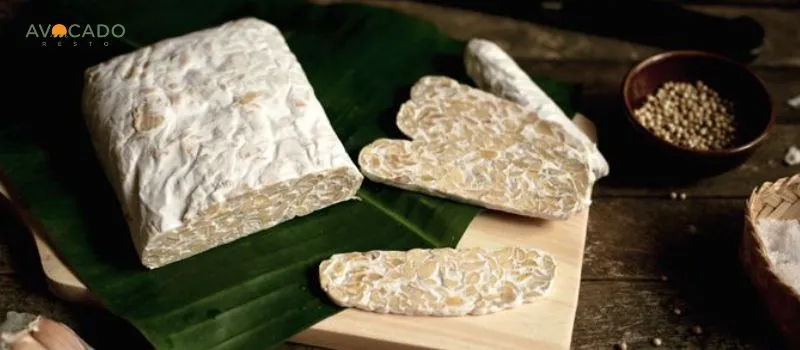
In the modern health and wellness space, the word “superfood” is frequently tossed around to market exotic, expensive ingredients. From South American acai berries to high-altitude Himalayan goji berries, global food trends constantly look for the next miracle ingredient to boost longevity, repair muscle tissue, and optimize gut health.
Yet, long before food scientists coined the term “superfood,” the people of Java, Indonesia, had already perfected one. We are talking about tempe (internationally spelled tempeh).
Unlike many other celebrated superfoods that are imported in expensive powders, tempe is an unpretentious, incredibly affordable cake of fermented soybeans that has quietly nourished the Indonesian archipelago for centuries. Today, it is recognized by global nutritionists as a supreme plant-based protein. To help you appreciate the depth of this local treasure before pulling up to refuel at Avocado Resto, let’s explore the history, science, and culinary power of Indonesia’s original superfood.
1. A Masterpiece of Serendipitous Javanese History
Unlike tofu, which traveled to Southeast Asia via Chinese trade routes around 1000 AD, tempe is a fiercely indigenous Javanese creation. It holds a distinct position as one of the few traditional soy-based staples that did not originate in China or East Asia.
Historical records indicate that the art of making tempe began around the 1600s in Central Java (specifically documented in the ancient Javanese literary manuscript, the Serat Centhini).
The origin story is a brilliant example of nature and human intuition working in tandem. Native Javanese communities traditionally wrapped cooked black or white soybeans in native leaves, such as banana, teak, or sea hibiscus (Hibiscus tiliaceus). The fuzzy undersides of these leaves naturally hold wild spores of a beneficial fungus called Rhizopus oligosporus. In Java’s warm, tropical, and highly humid climate, these spores naturally inoculated the beans.
Instead of rotting, the soybeans sprouted a beautiful, dense blanket of white mycelium the root structure of the fungus. This knitted the loose beans together into a solid, sliceable cake with a rich, nutty, and savory aroma. What began as a chance environmental interaction quickly evolved into a masterful fermentation technique.
2. The Fermentation Magic: Unlocking Maximum Bioavailability
What elevates tempe from a simple legume to an undisputed superfood is the magic of its fermentation process. Legumes like soybeans are packed with macro-nutrients, but they also contain “anti-nutrients” like phytic acid. Phytic acid binds to critical minerals within the digestive tract, preventing your body from absorbing things like iron, zinc, and calcium.
When Rhizopus oligosporus dines on the soybeans during its 24-to-48-hour fermentation window, it performs a form of structural pre-digestion:
- Enzymatic Breakdown: The fungus produces proteases and phytases that actively dismantle complex plant proteins and completely neutralize the problematic phytic acid.
- Nutrient Liberation: Because the anti-nutrients are stripped away, the solubility and bioavailability of trace minerals skyrocket. The total soluble iron in the soy increases by over 60%, making tempe a highly efficient weapon against iron-deficiency anemia.
- Oligosaccharide Reduction: The fermentation process consumes the complex sugars (stachyose and raffinose) that typically cause gas and painful bloating when eating traditional beans. This makes tempe remarkably easy on the human digestive system.
3. The Nutritional Blueprint: A Complete Protein Heavyweight
When you look closely at the macro and micro-nutrient profiles, tempe easily outperforms almost every other plant protein on the planet.
A Genuine Complete Protein
Many plant-based foods lack one or more essential amino acids, requiring vegans and vegetarians to carefully combine different foods to get a full protein profile. Tempe is a rare exception. It contains all nine essential amino acids that the human body cannot synthesize on its own, classifying it as a complete protein equivalent to animal meat.
High-Volume Density
Because tempe retains the whole soybean rather than just the strained milk (the way tofu is made), it is extraordinarily dense. A single 100-gram serving delivers roughly 19 to 21 grams of protein. That is nearly double the protein content of tofu and satisfies a massive chunk of your daily requirements in a single meal.
A Goldmine of Prebiotic Fiber and Vital Nutrients
Because the entire bean remains intact, tempe is highly rich in dietary prebiotic fiber (providing about 7 grams per 100g serving). This fiber feeds the beneficial bacteria in your microbiome, generating short-chain fatty acids that boost immunity and support brain function. Furthermore, it delivers heart-healthy polyunsaturated fats, zero cholesterol, and a substantial dosage of B-vitamins (including riboflavin and niacin) and bone-strengthening manganese.
Tempe Nutritional Matrix at a Glance (Per 100g)
| Nutritional Element | Content Value | Primary Health Benefit |
| Complete Protein | 19g – 21g | Muscle repair, cellular growth, and long-lasting satiety |
| Dietary Prebiotic Fiber | 6g – 8g | Fuels healthy gut microbiota, lowers bad LDL cholesterol |
| Bioavailable Iron | ~3.6 mg | Optimizes oxygen transport in blood cells, fights fatigue |
| Manganese | ~54% of Daily Value | Supports bone structure formation and acts as an antioxidant |
| Isoflavones | Exceptionally High | Powerful phytoestrogens that combat systemic inflammation |
Fuel Your Post-Surf Recovery at Avocado Resto
Surfing along West Bali’s rugged coastline whether you are carving up the endless rolling lefts at Medewi Point or riding punchy peaks at a nearby river mouth is a demanding sport. Paddling against sweeping ocean currents requires a tremendous amount of muscular endurance and drains your glycogen stores.
When you pack up your board and walk off the sand, your body needs clean, restorative fuel to rebuild torn muscle tissue and replenish lost energy. That is exactly why we champion tempe at Avocado Resto.
Conveniently located in the heart of the village, Avocado Resto bridges the gap between traditional Indonesian heritage and modern, health-conscious nutrition. We treat tempe with the culinary respect it deserves, highlighting its firm, meaty bite and earthy, mushroom-like flavor notes.
Whether you opt for thinly sliced, perfectly spiced crispy tempe alongside a bowl of local grains, or enjoy it integrated into a nutrient-packed, modern health bowl topped with creamy avocado, our kitchen ensures you are getting optimal post-surf nutrition. Stop by Avocado Resto today, experience the deep culinary history of Java, and discover for yourself why this ancient Indonesian staple continues to reign as the world’s finest original superfood!
Avocado Resto
📍 Jl. Widuri Simpang Tiga, Medewi, Jembrana, Bali
📞 081338546264
✉️ eat@avocadoresto.com
🌐 www.avocadoresto.com