
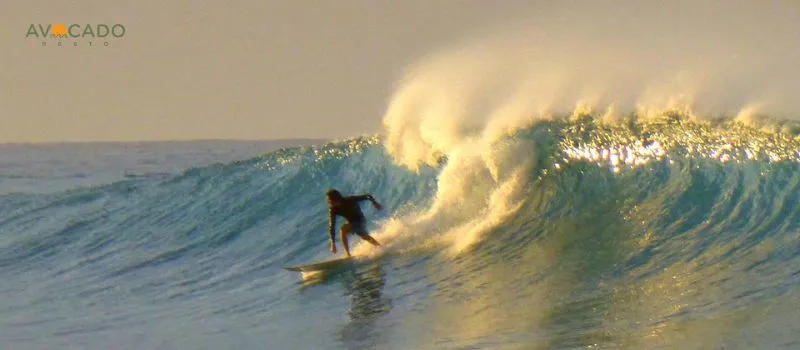
When surfers discuss Bali, their minds instantly drift to the southern tip of the island the majestic limestone cliffs of the Bukit Peninsula, or the bustling beach breaks of Canggu. Yet, seasoned travelers who value long, open faces, uncrowded line-ups, and a slower pace of life look further up the southwest coast. They head toward West Bali, a region defined by towering coconut plantations, black volcanic sand, and world-class waves like Balian and Medewi.
Because West Bali faces the sweeping Indian Ocean from a unique angle, its surf conditions are heavily dictated by Indonesia’s two distinct meteorological periods: the Dry Season and the Wet Season. While common surf lore says you should only visit Bali’s west coast in the dry summer months, the truth is far more nuanced. West Bali behaves dynamically all year round.
The Dry Season (April – October): Peak Swell and Dawn Patrol Glory
The dry season is driven by the Southeast Monsoon. During these months, the weather is remarkably consistent: warm, sunny days, lower humidity, and cool evening breezes. For the archipelago, this is the undisputed “high season” for surf.
The Swell Dynamics
From May to September, deep low-pressure systems in the southern Indian Ocean act like a mechanical wave machine, sending large, long-period South-Southwest (S-SW) groundswells traveling north straight toward Bali. West Bali’s point breaks and river mouths act as perfect catchments for this energy.
During the peak dry season, West Bali rarely goes flat. Breaks like Medewi hold double-overhead swells with ease, transforming into long, sweeping canvas walls, while Balian pumps out powerful, shifting A-frame peaks that test your paddling endurance.
The Trade Wind Dilemma
While the swells are massive and reliable, the dry season brings a specific meteorological challenge to the west coast: strong Southeast (SE) trade winds.
By 9:30 AM or 10:00 AM on a typical July day, the SE trades kick into high gear. Because West Bali’s coastline twists toward the southwest, these trade winds blow cross-onshore. This wind angle chops up the ocean surface, creating bumpy, section-heavy, and less predictable waves by midday.
The Dry Season Strategy: To score flawless, glassy conditions, you must become a devotee of the Dawn Patrol. Wind speeds are typically dead calm or gently offshore (North-Northeast) right at sunrise. Paddle out at 6:00 AM, ride pristine, mechanical walls for three hours, and head back to shore just as the wind begins to ruffle the lineup.
The Wet Season (November – March): The “Secret” Offshore Window
As October transitions into November, the wind patterns undergo a complete reversal. The Northwest Monsoon arrives, ushering in tropical downpours, high humidity, and shifting weather patterns.
In southern Bali, the wet season forces most surfers to abandon the west coast entirely, driving crowds across the island to east coast spots like Keramas or Sanur. However, West Bali holds a special card during the rainy months.
The Favorable Wind Shift
When the monsoon winds blow from the West-Northwest (W-NW), they hit certain setups in West Bali as a direct offshore wind.
Because spots like Medewi are heavily protected by local headlands and topographical features, a light-to-moderate wet season wind can groom the waves into exceptionally smooth, glassy, and perfectly clean walls. February and March, in particular, are historically famous for producing long, immaculate, and entirely uncrowded offshore days in West Bali.
Playful Swells and Empty Lineups
During the wet season, the raw power of the Indian Ocean softens. The massive, intimidating groundswells of July are replaced by medium-period, user-friendly swells.
For intermediate surfers, longboarders, and cruisers, this is an absolute goldmine. The waves are smaller, highly rippable, and incredibly fun. Best of all, the dry season crowds vanish. You can frequently share a lineup that would have 50 people in July with fewer than five other surfers in January.
Head-to-Head Comparison
To help you decide which season suits your style, here is a breakdown of how the conditions match up:
| Feature | The Dry Season (April – October) | The Wet Season (November – March) |
| Wave Size & Power | Heavy, powerful, consistent (Head-high to Double Overhead+) | Medium, playful, forgiving (Waist-high to Head-high) |
| Wind Conditions | Pristine offshore at dawn; strong cross-onshore by midday | Variable; frequent clean, light offshore windows all day |
| Crowd Factor | High to Moderate (Lineups are busy during peak sets) | Extremely Low (Quiet, peaceful, empty waves) |
| Water Quality | Crisp, clear, and refreshing | Can turn muddy/cloudy near river mouths after heavy rains |
| Best Suited For | Advanced shortboarders, chargers, early-morning hunters | Longboarders, intermediates, those seeking a relaxed vibe |
Safety and Environmental Considerations
While both seasons offer world-class rewards, they also require distinct precautions:
- Dry Season Hazards: Low tides during peak swells expose shallow rocks and sharp barnacles. Always wear booties if you are navigating a rocky point break like Medewi at low tide.
- Wet Season Hazards: Because West Bali’s best breaks are located near river mouths (where river silt creates the optimal sandbars and boulder setups), heavy tropical rainstorms wash organic debris and runoff into the sea. It is wise to avoid surfing directly after a massive downpour until the water clarity improves.
Nourish Your Body at Avocado Resto
Whether you choose the adrenaline-fueled dawn patrol of a dry season July or the quiet, glassy, rain-slicked rollers of a wet season January, surfing in West Bali demands immense physical output. Fighting the sweeping currents of a point break or paddling past heavy river-mouth peaks will leave your energy reserves depleted.
When you pack up your board, make your way to Avocado Resto, your ultimate West Bali culinary sanctuary.
We specialize in high-vibrancy, nutrient-rich food engineered specifically for active lifestyles and surf recovery. Fuel your post-session recovery with our signature protein-loaded Avocado Toast, rehydrate your cells with fresh, locally sourced cold-pressed juices, or indulge in an ice-cold, vitamin-packed tropical smoothie bowl. Open year-round, Avocado Resto provides the perfect space to dry off, warm up, study the local tide charts, and share the stoke of West Bali’s endless waves with fellow travelers.
Avocado Resto
📍 Jl. Widuri Simpang Tiga, Medewi, Jembrana, Bali
📞 081338546264
✉️ eat@avocadoresto.com
🌐 www.avocadoresto.com